

World's first high-entropy alloy powder made solely of precious metals opens up new horizons in the field of materials
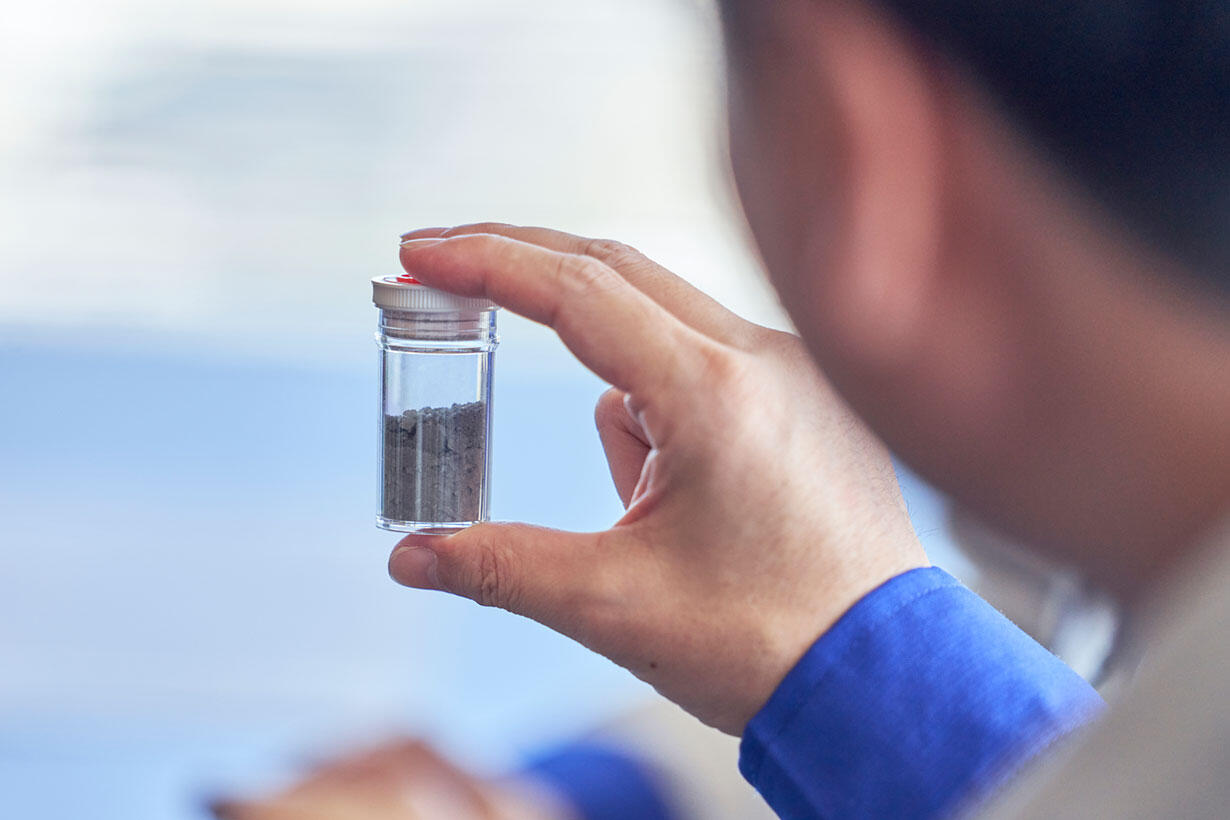
Have you heard of the term “high-entropy alloy”? TANAKA PRECIOUS METAL TECHNOLOGIES, which is responsible for the manufacturing business of the TANAKA PRECIOUS METAL GROUP, is boldly taking on this new category. The company has become the first to successfully develop “high-entropy alloy powder” using only precious metals, and has obtained patent rights (Patent No. 7300565) for the alloy powder and its manufacturing methods, which are used in this product, as well as for more than five types of precious metal alloy powders. We spoke with Takuya Hosoi and Toshie Kondo from the Chemical Recovery Company, who are involved in the development of this unprecedented new alloy material.
What is the 'high-entropy alloy' that is attracting attention now?
─This time, you have achieved a world-first development of high-entropy alloy powder composed solely of precious metals. First, could you provide us with more details on “high-entropy alloy”?

HOSOI: Although the definition is still not clear, a “high-entropy alloy” is defined as an alloy that contains five or more elements in approximately equal atomic ratios and does not have a single element that accounts for more than half of its composition.
Kondo: This concept was announced about 20 years ago, so it is a relatively recent development considering the long history of metals. Since then, universities and companies in Japan and abroad have been actively conducting research on this concept, and it is beginning to become a trend.
HOSOI: First of all, an alloy is a metal that is a mixture of two or more metals and nonmetals. Alloys can be further classified, and examples include solid solutions that melt at the atomic level and those that form compounds (intermetallic compounds) among metals. Taking solid solutions as an example, it is generally the case that atomic sizes differ by element, so when different elements mix at the atomic level, distortion occurs in the atomic arrangement. As a result, the movement of atoms becomes difficult, and phenomena such as increased strength and heat resistance occur.
Kondo: For example, a common alloy is stainless steel. Iron, the main component of stainless steel, is a metal that tends to rust, but it is made rust-resistant by adding chromium and making it an alloy. In addition, different properties are exhibited by changing the mixing ratio and adding elements such as nickel. By not simply treating it as a mixture but instead making it an alloy through processes such as heating, it is possible to improve strength, heat resistance, chemical resistance, and electrical conductivity, among others. As a result, various alloys have been developed and are in widespread use according to their intended applications.
HOSOI: The newly developed high-entropy alloy contains more than five different atoms mixed together, and to put it simply, the atoms are in a cramped state similar to that of an overcrowded train. As a result, it may exhibit performance beyond the characteristics previously known, and it is said that it may also have the potential to generate a new effect called "cocktail effect" that is not possessed by the individual elements.
A completely new high-entropy alloy development by specialists in precious metals
─What prompted you to take on this development?
HOSOI: The world is changing at a dizzying pace. In this environment, we have developed materials and products that delight our customers by quickly and accurately obtaining information and understanding their needs. However, given the magnitude of the ongoing changes, I believe that it will be difficult to create what will be needed in the future if we continue to adopt the traditional stance of basing our approach on existing needs.
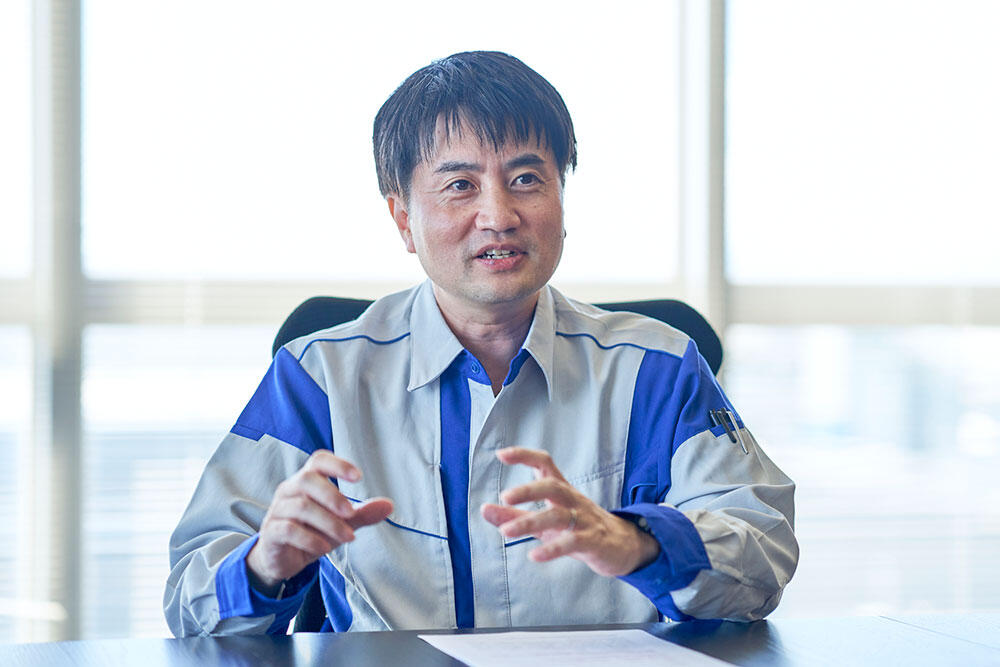
We decided to return to our origins and consider what constitutes a good product and what we can do. As a result, we concluded that a good product is one that “contributes to society through products that bring joy to customers.” As a manufacturer of precious metals, we once again felt that we wanted to contribute to society through precious metals.
Our company has a higher-level concept of "Mastering Precious Metals." With that in mind, we thought we would try to create something new that no one has ever achieved before. We decided to aim for "Mastering Precious Metals" in the field of precious metal powders, which has been our department's business for many years. We wanted to prove that, by effectively applying the seeds—something like the foundation of development that we have accumulated so far—and using the technologies that our company has developed, it is possible to create something new. This may have helped to raise motivation for this development.
─This is where high-entropy alloys came into focus.
HOSOI: Yes. High-entropy alloys have been attracting considerable attention in recent years as they may exhibit characteristics not seen in conventional alloys. Research has also been progressing in the field of precious metals, where interesting characteristics have been observed. However, research has mostly been for research purposes, and there have been no cases of mass production in the field of powder. Our department specializes in product development and mass production technologies tailored to customer needs. We thought that if we were to contribute in this area, it would be by commercializing high-entropy alloy powders with sufficient productivity and quality to provide materials that customers can evaluate without hesitation. Of course, we believe that TANAKA would be the one to do so, offering high-entropy alloys with only precious metals.
Kondo: Precious metals have various excellent properties even when used individually. There was also the expectation that when they are used in high-entropy alloys, they may exhibit even better properties.
HOSOI: Furthermore, if we establish a technology that can produce multiple metal alloy powders, it should be relatively easy to respond to compositions below that. When the need arises, we should be able to respond quickly to various compositions. Also, I was driven by curiosity, as it is already difficult to produce fine and uniform powders, and it would be amazing if we could produce homogeneous high-entropy alloy powders with more than five components.
Our accumulated know-how and technological capabilities enable speedy manufacturing.
─What do you think was the reason for successfully manufacturing it in about a month, a short period of time, after the start of trial production?
HOSOI: The alloy powders in question have been developed and produced by us for many years and are used as materials for automotive exhaust gas sensors, resistors, and water electrolysis catalysts. Furthermore, we treat precious metals as mass-produced items, making it relatively easy to obtain high-entropy alloy powder. In addition, although they are alloys, we have also accumulated know-how on manufacturing the respective metal powders, which allowed us to refer to them while advancing development.
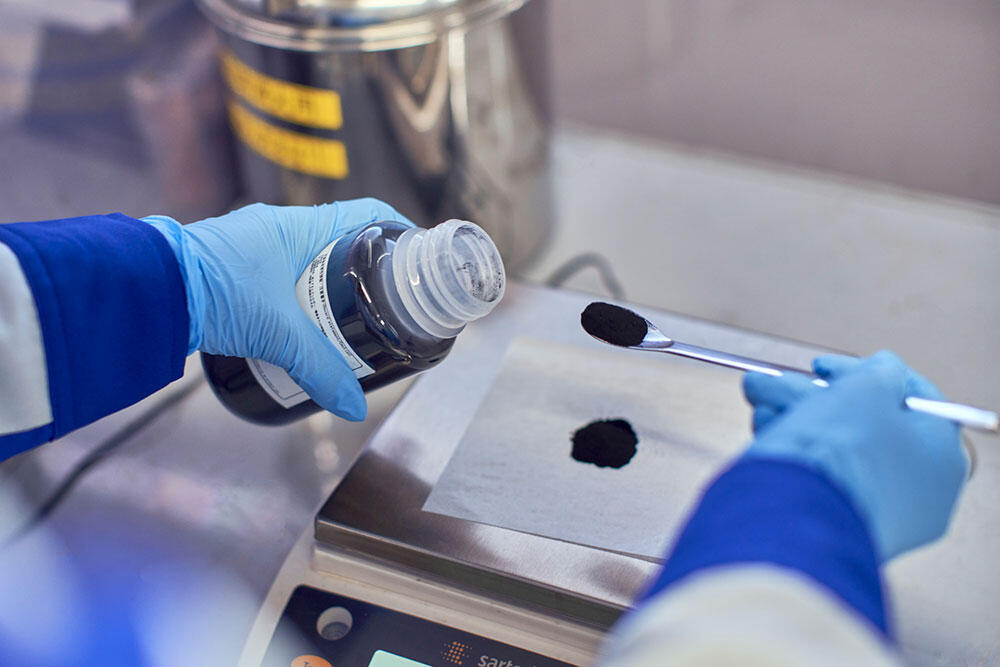
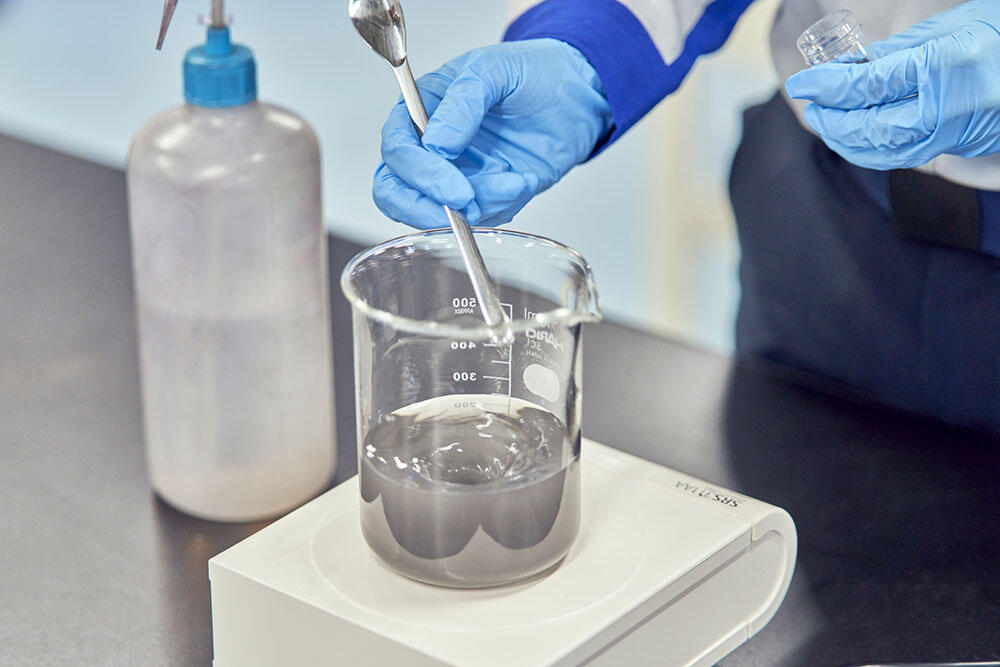
Kondo: Actually, it might be better to say that we "just happened to make it" about a month after we started prototyping. If we hadn't been able to make it then, we might have thought, "It wasn't easy after all," and we might not have gone this far. Including that, I feel that the reason we were able to successfully make the first one in such a short period of time was because of the accumulated experience that many people in the company had accumulated over the years.
After that, when we changed the prototype conditions, such as increasing the processing volume or changing the form of processing, there were times when a homogeneous alloy could not be obtained. In addition, the five precious metals used this time—Pt (platinum), Pd (palladium), Ru (ruthenium), Ir (iridium), and Rh (rhodium)—have different crystal structures, with Ru being the only one with a different crystal structure. Since elements with the same crystal structure tend to form alloys, we changed the size of the raw materials and the pretreatment conditions through trial and error, and eventually managed to achieve stable production. We have accumulated a lot of data, including failures, during this development, and we intend to use it effectively in the future.
─It is said that the speed from application to registration as a patent was also quick.
Kondo: Yes. This was my first patent application, and I applied for it in February 2023 and it was registered in June. I was surprised that the approval was faster than I had expected.
HOSOI: When applying for a patent, it is generally necessary to have multiple exchanges with the Japan Patent Office (JPO) in order to obtain a patent grant, as it is necessary to describe the differences from prior art if it exists. However, this alloy powder was granted registration without a single comment from the examiner. I was very happy about this, as I had had a lot of difficulties with past patent applications.
Growing Expectations for “Unique Alloys”
─What are your plans for the future?
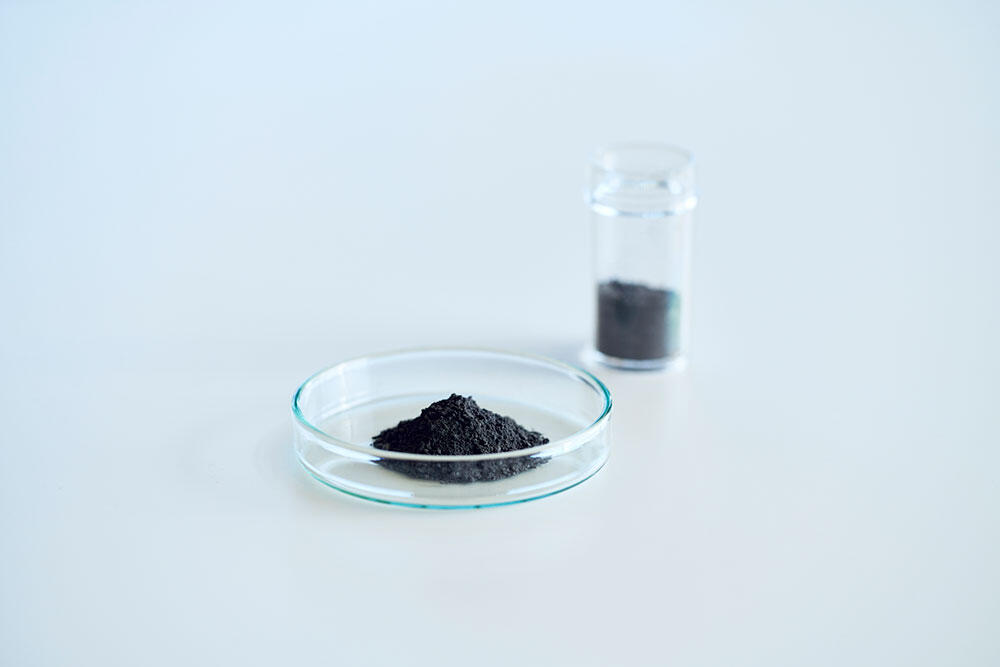
HOSOI: We have been prototyping alloy powders with various types of precious metals and powder sizes. We have now established mass production of five-component high-entropy alloy powders with Pt, Pd, Ru, Ir, and Rh with a particle size of around 1 μm, and have decided to provide samples.
Kondo: At present, we conduct research while considering to some extent the expected applications and fields of use, as well as the characteristics that will be available and the characteristics that will be required at that time.
HOSOI: I believe high-entropy alloy powder can be used for various applications. For example, it can be mixed with organic substances to form paste for use in conductive films. It may also be used in powdered metallurgy for structural materials. We will continue to explore specific applications while looking for excellent properties, but I believe this material can be used as a material for structural components that require uniform composition distribution.
─Expectations are rising as this is an alloy with unprecedented properties.
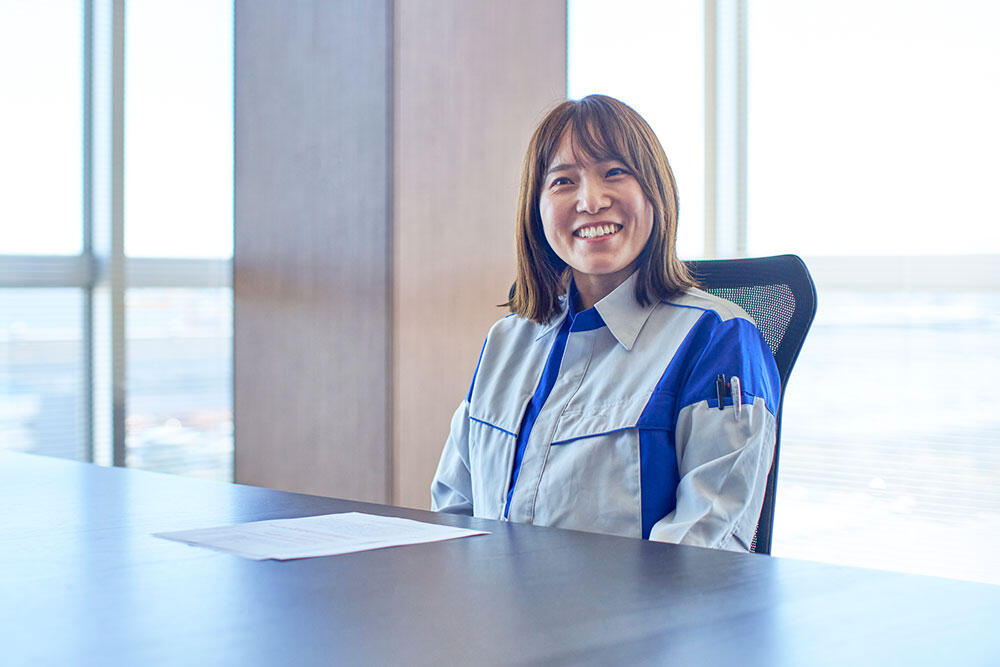
Kondo: We report on the progress of development once a month at the factory, and engineers from other departments ask us, "Is there any update?" I am very grateful that there are many people who are interested. I hope we can share new information as it becomes available and make progress, even if only gradually. Now that we have obtained a patent, I hope this will lead to more opportunities for our customers to learn about this alloy.
HOSOI: By establishing a manufacturing process, we have reached a stage where we can relatively smoothly provide this alloy to customers who wish to evaluate or try it. As a materials manufacturer, we cannot evaluate our products all the way to the very end. However, we believe that by providing this completely new material to customers who have previously faced the issue of "wanting to do so but having no materials," new value will be created, which in turn will lead to what we envision as "contributing to society through precious metals."
There are still many things that we need to explore. For example, we believe that if we can respond to detailed requests, such as wanting to slightly alter the composition, we will be able to better meet a wider range of needs. We will continue to take on challenges without giving up.
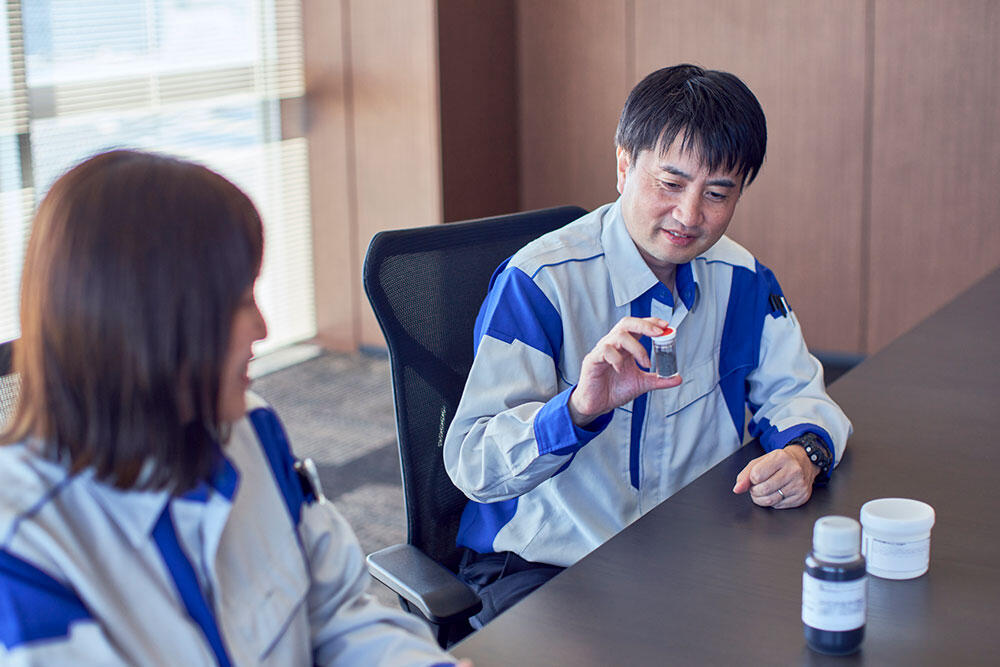
◆ ◆ ◆
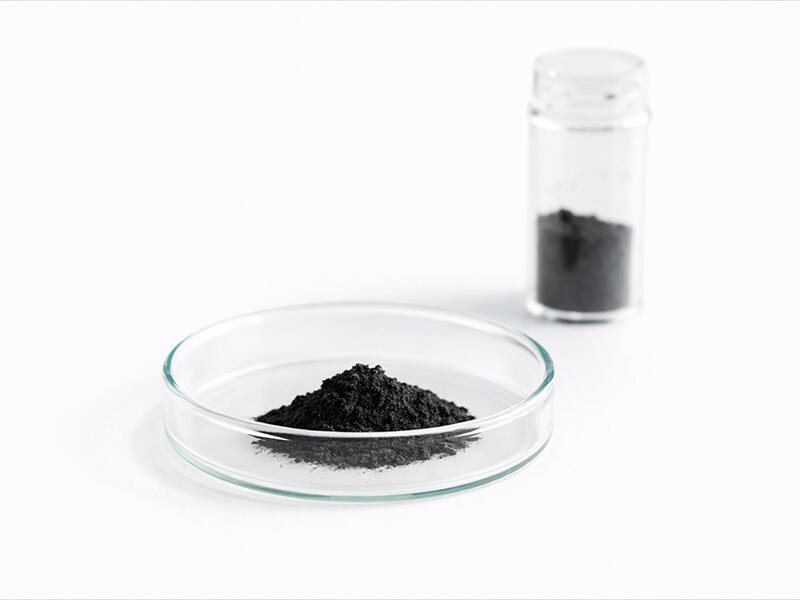
High-entropy alloy powder exclusively made from precious metals has just been born. It is expected to have a wide range of applications due to its many possibilities. In addition to its high potential to be a solution for current challenges, it may also exhibit excellent properties not found in existing alloys, potentially generating value that could change the common sense of various industries.
Related Information
How was this article?
If you found this helpful, please share it.


