

Gold-Tin Alloys for Brazing
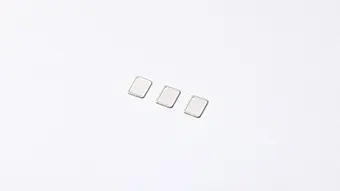
What is "Gold-Tin Alloys for Brazing"?
This highly reliable bonding material uses a gold-tin alloy, which is gaining attention as a high-temperature solder and lead-free alternative. It is available in a variety of shapes, including ribbon, preform, wire, ball, and target. TANAKA proprietary technology achieves high sealing reliability and excellent dimensional accuracy. It is an ideal material for advanced assembly fields, such as semiconductor laser modules, which require high precision and environmental resistance.
Gold-tin solder for high sealing and bonding reliability.
Our gold-tin alloys are available in various shapes and sizes.
Our gold-tin alloy is suitable as a bonding material for high frequency devices and optical communication devices and as a substitute for high temperature lead-free solder.
This gold-tin alloy not only can be supplied as brazing filler metals but also can be processed into sputtering targets and vapor deposition materials. In addition, the gold-tin alloy can be fused, only in the quantity needed, to metals or ceramics and shipped as fusion products.
We also offer gold-tin glass lid products developed for light-emitting devices.
Gold-Tin Alloys for Brazing Overview
Features
- Gold-tin alloys of various compositions are available to suit each application.
- Improvement of gold-rich layer is possible
- Excellent sealing reliability with fewer defects such as voids
- Sealed devices can be mounted on circuit boards using lead-free solder.
Types
| Composition | Melting point (℃) | Vickers hardness (HV) | Specific gravity |
|---|---|---|---|
| AuSn18 | 278-360℃ | 145 | 14.89 |
| AuSn20 | 278-300℃ | 135 | 14.52 |
| AuSn21 | 278℃ | 135 | 14.35 |
| AuSn21.5 | 278℃ | 135 | 14.26 |
| AuSn90 | 217℃ | 17 | 7.78 |
Compositions other than those listed above are available.
Processed Products
| Shape | Minimum dimensions |
|---|---|
| Ribbon | 15 µm thick |
| Preform | 20µm thick |
| Wire | φ0.2 mm |
| Ball | φ0.08mm |
| Sputtering Target | 3.0mm thick |
The minimum dimension differs depending on the type, composition, shape, etc.
Applications
Semiconductor laser modules, optical device components, SAW filters, crystal oscillators, millimeter-wave and microwave radar components, lead frames, lead pins, various ceramic packages, etc.
Gold-tin brazing lids for crystal oscillating devices (Window type)
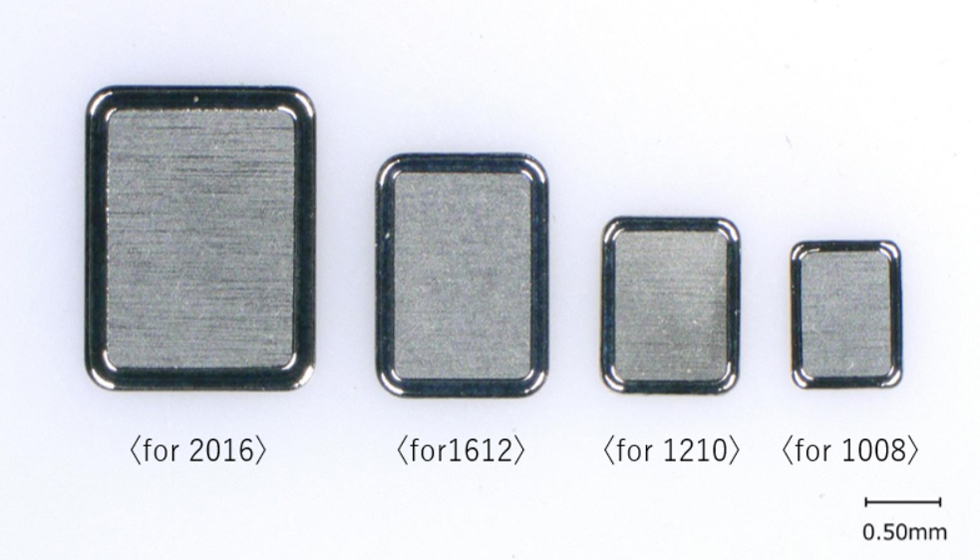
Application Example – Fusion Products
Features
- The gold rich layer can be improved (bonding and sealing properties) by optimally adjusting gold and tin compositions according to the thickness of gold on the material surface.
- Can be fused not only to ceramics but also to metalized substrates and conductive surfaces.
- High dimensional accuracy with up-to-date equipment
- Shorter assembly process and improved product yields
Changes in the cross-sectional structure of the lid with different Au/Sn compositions
![[Changes in lid cross-sectional structure due to differences in AuSn composition]AuSn20](https://data.wovn.io/ImageValue/production/688b3c307ffdea2de8055986/en/e7fbc1b9bde863f32c3deca285f99da5/wp_content_uploads_sites_images_ex_en_products_images_c01_img_block02_01.jpg)
![[Change in lid cross-sectional microstructure due to differences in AuSn composition]AuSn21.5](https://data.wovn.io/ImageValue/production/688b3c307ffdea2de8055986/en/3482f048589d103e63ed069f73cc1fcf/wp_content_uploads_sites_images_ex_en_products_images_c01_img_block02_02.jpg)
Examples of fused products
- Customer supplied materials
- Conductor surface of ceramic products
- Heat sinks, lead frames
- Semiconductors and Compound Semiconductors
- Lead pins (Ni/Au plating) … Base materials: Kov, FeNi, Cu, Fe, etc.
- Lids (plates/stamped pieces) … Base materials: ceramic, Kov, FeNi, etc.
- Gold-tin brazing lids for package sealing (AuSn lid on the upper section and SKe-Lid on the lower section)
- Our developed lid for sealing small crystal oscillating devices (Window type) is designed so that gold-tin alloy does not flow into the lid when it is sealed, providing a highly reliable seal with a smaller amount of gold-tin alloy.
Quartz glass lid with AuSn for deep ultraviolet LEDs: SKe-Lid
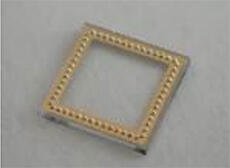
Controlling cracks and metallization separation in applications such as semiconductor lasers and automotive sensor devices raises productivity and reduces costs
Employed proprietary technologies that properly control the shape and dimensions when applying the AuSn sealant to the quartz glass. Possible to control cracking and metallization separation for obtaining higher yields to contribute to improved productivity and lower costs.
Features
- By using quartz glass as a cover material (AR coating is also available), the transmissivity of high-output deep ultraviolet LEDs can be increased
- Since the glass is pre-coated with gold-tin solder, it is easy to position it with ceramic packages during sealing.
- AuSn airtight sealing raises reliability and durability
- The use of our proprietary technology controls the formation of cracks during application of AuSn to quartz glass with high transmissivity of deep ultraviolet wavelengths and ceramic package sealing
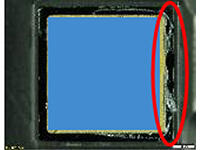
Cracks occur after sealing
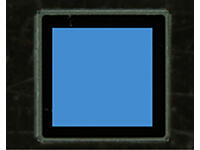
No cracks after gold wire bonding
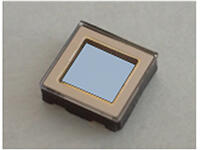
Ceramic Package
Devices that require high reliability and high durability, such as semiconductor lasers, which are increasingly being SMD (Surface Mount Device) and automotive sensors with advanced autonomous driving functions, need to use cover materials with transparency. In these devices, the use of gold-tin sealing is also expected.
Related Information

Please Inquiry
Please feel free Inquiry with any inquiries regarding products, media, competitive funding, etc.