

The role of precious metals in medical device manufacturing

Source: Today's Medical Developments
Date: March 10, 2026
author: Clare Buck (Managing Editor / Manufacturing Group)
Cooperation: Yasutaka Ihara, Director and Executive Officer, TANAKA PRECIOUS METAL TECHNOLOGIES CO., LTD.
link: The role of precious metals in medical device manufacturing
TANAKA PRECIOUS METAL TECHNOLOGIES CO., LTD.'s Yasutaka Ihara discusses trends, challenges, and outlook of the precious metals market and how it relates to the medical device manufacturing industry.
Precious metals are a critical component in modern medical devices. Yasutaka Ihara, director and corporate office at TANAKA PRECIOUS METAL TECHNOLOGIES Co., Ltd. who has led industrial precious metal product go-to-market strategies across the world, offers his perspective on precious metal trends impacting the medical manufacturing industry.
(Note: Precious metals refer to a group of eight metallic elements on the periodic table: silver (Ag), gold (Au), platinum (Pt), palladium (Pd), iridium (Ir), rhodium (Rh), ruthenium (Ru), and osmium (Os).)
Please provide a brief overview of how precious metals are commonly used in medical device manufacturing.
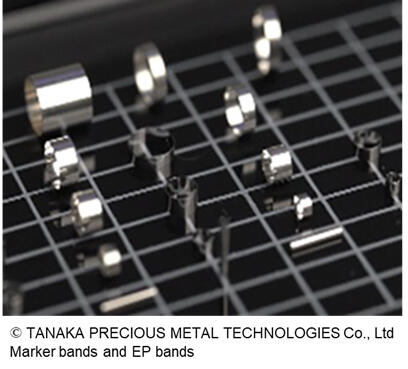
Platinum, gold, and other precious metals are used in medical device manufacturing because they provide biocompatibility, visibility inside the body (radiopacity under X-ray), low electrical resistance, and high material reliability. For these reasons, they are commonly used in surgical devices for minimally invasive treatments and in certain implant components. In addition, silver offers excellent low electrical resistance and is frequently used as an electrode material in inspection equipment and sensing applications.
What are the advantages of precious metals over other materials for certain medical devices?
Precious metals meet the most critical requirements for medical devices – biocompatibility and high reliability – while also enabling additional functional benefits such as radiopacity under X-ray and low electrical resistance. In addition, the potential to further enhance performance through the development of new alloy compositions is currently being considered.
What are some current trends in the precious metals market, and how do they affect medical device manufacturing?
Recently, gold, platinum, and silver have been trending upward in price, largely attributed to geopolitical uncertainty. However, price volatility has historically been a normal feature of the precious metals industry, and the current market environment is not considered exceptionally unusual. Industrial demand remains stable, and required materials continue to be supplied through established supply chains. Although we closely monitor price movements, we don’t currently see immediate critical risks to medical device manufacturing.
What factors do you see impacting the precious metals supply chain in the future, and how will those factors impact medical device manufacturing?
If geopolitical uncertainty persists over the long term, the precious metals market is likely to adapt to that environment. Precious metals have always been finite and high-value materials, and historically they have been selected only when they provide performance that justifies their cost. That trend may become even more pronounced. In the short term, efforts to expand recycling of precious metals from end-of-life medical devices are expected to continue. Over the medium to long term, development will likely focus on precious metal materials capable of delivering high performance with reduced material content.
This article was reprinted from an article published in “Today's Medical Developments” on March 10, 2026, with permission from Machine Design. This article was translated by TANAKA from Today's Medical Developments with their permission.
This article was published on Today's Medical Developments.Further information can be found here:
Learn more... (Today's Medical Developments)
Related Information
Medical Device Materials: Contributing to a Healthy and Prosperous~Well-being~
TANAKA has been highly regarded for its precious metal processing technology over many years.
By combining advanced materials knowledge with processing technology that is among the best in the industry, we provide safe and high-quality materials in a stable manner.

How was this article?
If you found this helpful, please share it.


