

Low-Temperature Sintering Paste for Au-Au Bonding: AuRoFUSE™
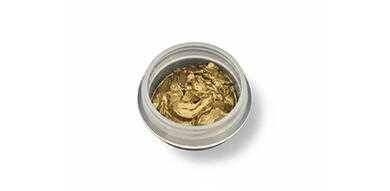
What is "AuRoFUSE™"?
This halogen-free gold paste, developed by TANAKA, is composed of submicron gold particles and a solvent, and enables gold-to-gold bonding at low temperatures without pressure. It is ideal for bonding applications that require high reliability, such as LEDs and power semiconductor devices. The material supports process simplification while maintaining low-temperature bonding performance and stable electrical and thermal characteristics.
Focusing on the low-temperature sintering properties of submicron-sized gold particles
Focusing on the low-temperature sintering properties of submicron-sized gold particles, TANAKA have developed a halogen-free gold paste that can be used for gold-gold bonding at 200℃. This paste is made solely from submicron-sized gold particles and a solvent, and can provide metal bonding with low electrical resistivity (5.4µΩ・cm) and high thermal conductivity (150W/m・K).
Features
Spherical submicron Au particles that do not contain polymers, etc.
- Sintering begins at around 150℃ without applied pressure
- Sintering without pressure results in porous sintered body ⇔ Dense Au is obtained by applying pressure
- Outgassing from sintered bodies is low because no organic protective agents such as resins or polymers are used
- High-purity Au is obtained after sintering


Properties of porous bonding obtained by “uncompressed bonding”
| Features | Characteristics of Bonds | AuRoFUSE™ 230℃ with no pressure |
|---|---|---|
| Low Resistance | Electrical resistivity (µΩ・cm, @25℃) |
5.4 |
| High thermal conductivity | Thermal conductivity (W/mK) |
>150 |
| High thermal resistance | Heat resistance (℃) | 1064 |
| Flexible | Young's modulus (Gpa, @25℃) |
9.5 |
| High strength | Shear strength (MPa, @25℃) |
30 |
| High content | Au content (mass%) | 99.95 |
| Au-Au bonding | Under Barrier Metal | Au/Pt/Ti, Au/TiW |
How to use
- A dispenser method and pin transfer method are used to supply the paste to the gold electrode on the circuit board.
- After mounting the device (gold electrode), bonding is possible in 20 minutes without applying pressure by raising the temperature to 200℃ (0.5℃/sec.).
- Bonding is possible in air or gas atmosphere and no washing is needed after bonding.
- Additional heating at 200℃ for about one hour is effective for increasing the bonding strength.
| Form of provision | Paste_Drawing No._TR-191T1000 | |
|---|---|---|
| Container type (container material) |
Syringe By EFD/5 cc syringe (PP)/ Piston (PE) 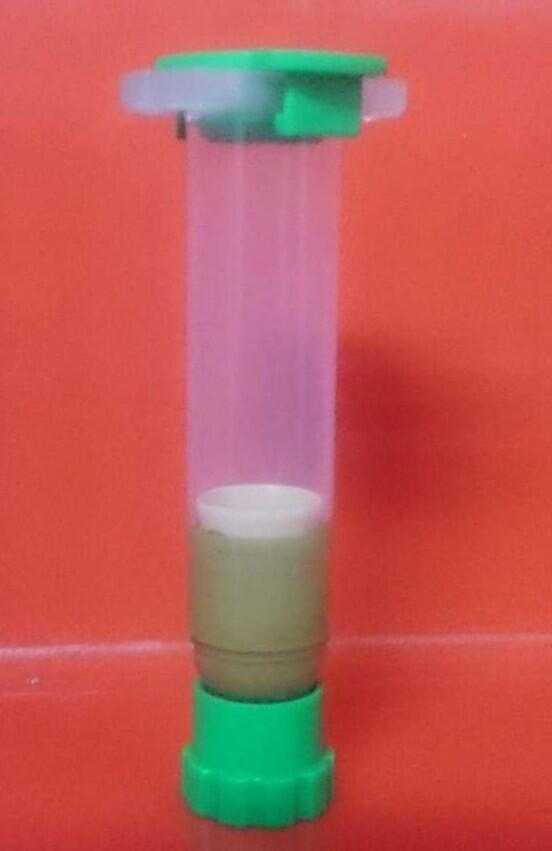 |
Pot Paste tube container (PP or PE) *Container type varies depending on the amount. 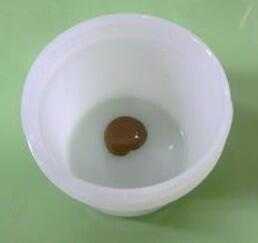 |
Comparison of Durability from Differences in Bonding Material
LEDs were flip-chip bonded to a metal circuit board using AuRoFUSE™ with gold-tin solder and silver-tin-copper solder. A LED module was created by mounting 12 LED elements connected in series of two rows. Subsequently, a thermal stress test was performed by applying a load of 24V at 350mA and turning the LEDs on and off (load time was 15 minutes). The results demonstrated a high bonding reliability of the LED devices connecting to gold particles.

Related Information
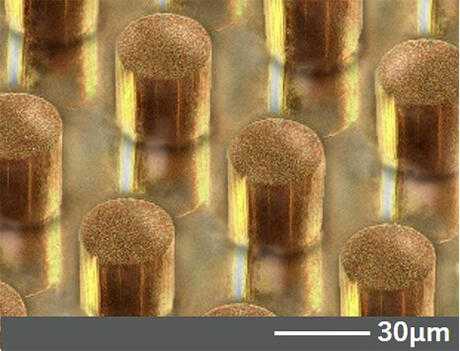
First, please make an Inquiry about the product.
For any questions regarding product specifications, pricing, delivery times, etc., please feel free to Inquiry here.