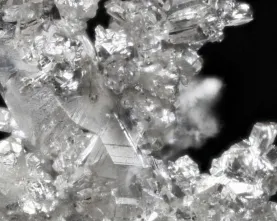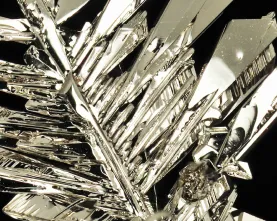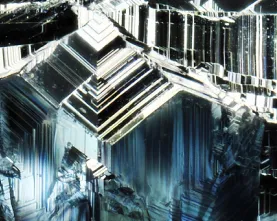

Pd Palladium
Has the ability to absorb large amounts of hydrogen, making it effective as high-purity hydrogen production equipment.

Palladium membrane
Hydrogen permeation mechanism
Palladium is a metal with excellent ability to only allow hydrogen to pass through.
Using this property, high-purity hydrogen can be produced from mixed gas by selectively separating only hydrogen using palladium metal films, making it the smallest “atomic sieve.” This technology is used in the production of ultra-high-purity hydrogen for “semiconductors” and “LEDs,” as well as in hydrogen production for “fuel cells.”
Precious Metal Element Data
| Atomic Number | 46 |
|---|---|
| atomic weight | 106.42 |
| Stable Isotope | 102Pd,104Pd,105Pd,106Pd,108Pd,110Pd |
| crystal structure | fcc |
| Metallic | Trans.Metal |
| Shell structure | 2,8,18,18 |
| Occupied Orbit | 4d10 |
| Oxidation state | 2,4 |
| Atomic radius | 1.37 |
| Shared bond radius | 1.38 |
| Atomic capacitance | 8.9 |
| Density (293K) | 12.02 |
| Melting point | 1554.8 |
| Boiling Point | 2964 |
| Specific heat | 0.24 |
| melting heat | 17.8 |
| heat of vaporization | 357.0 |
| Thermal conductivity (273K) | 72 |
| Electrical resistivity (273K) | 10.0 |
| Linear thermal expansion coefficient (293K) | 11.8 |
| First ionization potential | 8.3369 |
| Second ionization potential | 19.43 |
| Electron Affinity | 0.562 |
| Electronegativity | 2.20 |
| Year of Discovery | 1803 |