

Reforming-, Shift-Reaction-, PROX Catalyst
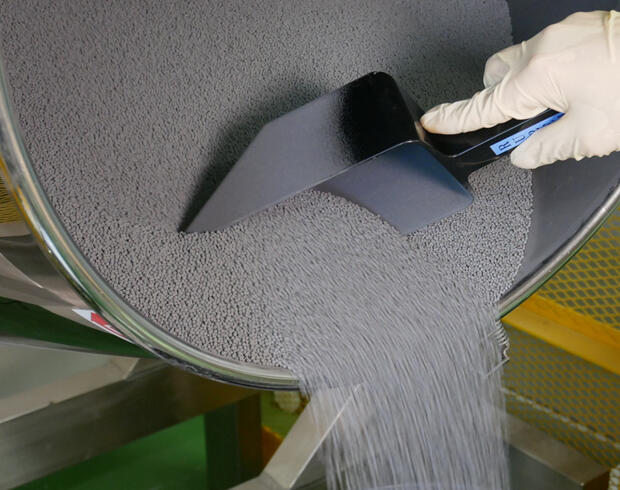
What are Reforming-, Shift-Reaction-, PROX Catalyst
?
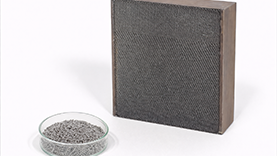
These are a group of catalysts used in the process of producing high-purity hydrogen from city gas, natural gas, and other organic materials. Reforming catalysts extract hydrogen and carbon monoxide from hydrocarbons and steam, while conversion catalysts convert carbon monoxide and steam into hydrogen and carbon dioxide, thereby removing carbon monoxide. PROX catalysts further reduce the remaining carbon monoxide, which ultimately remains at less than 1%, to a few ppm. These are high-performance precious metal catalysts with a proven track record in the reforming systems of fuel cells and hydrogen generators.
We provide a one-stop service for catalysts used in the hydrogen generation process.
Reforming hydrogen generators extract hydrogen from city gas or natural gas and use it in fuel cells or chemical synthesis, and can obtain high-purity hydrogen by installing a steam reforming catalyst, a modified catalyst, or a PROX catalyst. We can supply these three types of catalysts.
PROX = Preferential Oxidation (carbon monoxide selective oxidation)
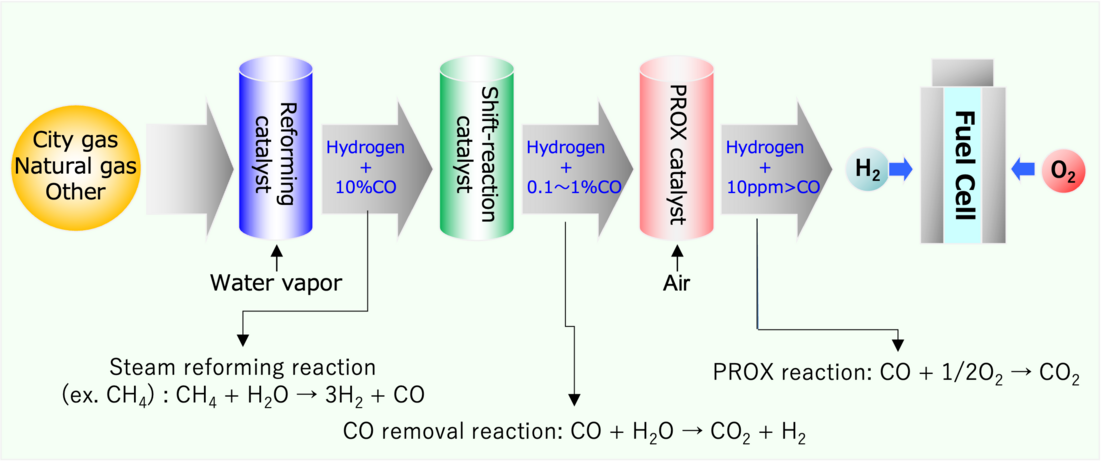
Overview of the Hydrogen Generation Process
・Reforming Catalyst: Generates hydrogen and carbon monoxide from hydrocarbon compounds such as methane
・Shift-Reaction Catalyst: Generates hydrogen and carbon dioxide from carbon monoxide and water
・PROX Catalyst: Selectively oxidizes CO gas contained in the reforming process gas into CO2
An example of usage (fuel cells)
Reforming Catalyst
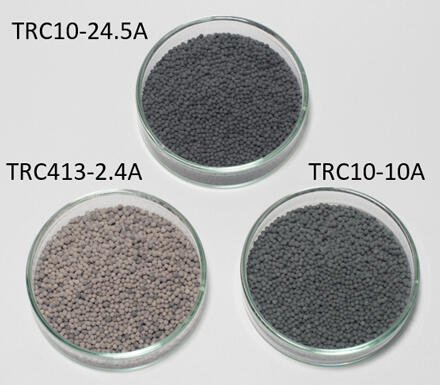
TANAKA's Reforming Catalysts
Steam reforming catalysts are catalysts that produce hydrogen from hydrocarbons such as city gas and natural gas. Our reforming catalysts are used by many customers as catalysts for various reforming reactions, including the hydrogen supplied to fuel cells.
Features
- Provides high-performance catalysts based on ruthenium and rhodium
- Maintains high catalytic activity at a wide range of temperatures
- Maintains high activity even with low precious metal loading, enabling catalysts to be provided at low cost
Main product lineup
| Product name | Precious metals | Particle size (sieve sorting) | Features |
|---|---|---|---|
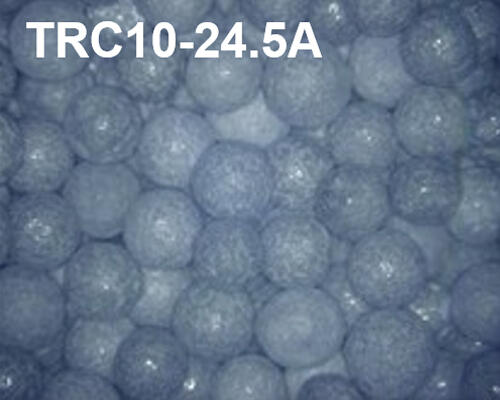
| TRC10-10A | Ru | Φ approx. 2mm | Low precious metal loading High activity |
| TRC10-24.5A | Ru | Highly active and durable product | |
| TRC413-2.4A | Rh | By-product ammonia suppression Carbon deposition suppression |
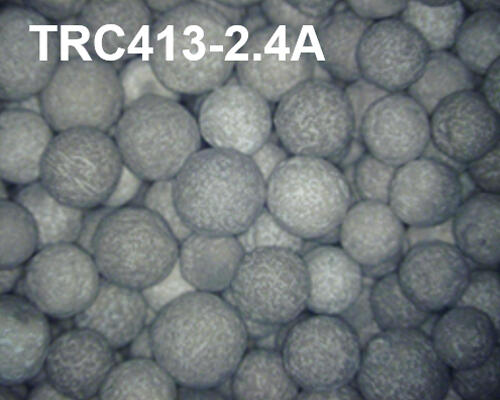
- We request for the signing of a Non-Disclosure Agreement (NDA) when providing samples and information such as precious metal content.
- We also accept consultations regarding the prototyping and made-to-order production of customized catalysts to meet customer requests.
Reforming Reaction Characteristics
Methane Reforming Characteristics
TRC10-10A (Ru)
![[GRAPH OF METHANE REFORMING CHARACTERISTICS—SV DEPENDENCE TEST RESULTS] TRC10-10A](/jp/products/img/img_reforming_shift_reaction_prox_catalyst_06.png)
| Item | Value (Unit) |
|---|---|
| Gas Type | CH4 |
| SV (wet) | 1,000 - 5,000 /h |
| S/C | 2.75 |
![[GRAPH OF METHANE REFORMING CHARACTERISTICS—S/C RATIO DEPENDENCE TEST RESULTS] TRC10-10A](/jp/products/img/img_reforming_shift_reaction_prox_catalyst_07.jpg)
| Item | Value (Unit) |
|---|---|
| Gas Type | CH4 |
| SV (wet) | 3,000 /h |
| S/C | 2.5,2.75,3.0 |
* Data for reference from laboratory experiments
The data is intended as a guideline only, as it may vary depending on the catalyst evaluation conditions, production conditions, usage environment, etc.
TRC10-24.5A (Ru)
![[METHANE REFORMING CHARACTERISTICS—SV DEPENDENCE TEST RESULTS GRAPH] TRC10-24.5A](/jp/products/img/img_reforming_shift_reaction_prox_catalyst_08.png)
| Item | Value (Unit) |
|---|---|
| Gas Type | CH4 |
| SV (wet) | 1,000 - 5,000 /h |
| S/C | 2.75 |
![[GRAPH OF METHANE REFORMING CHARACTERISTICS VS. S/C RATIO] TRC10-24.5A](/jp/products/img/img_reforming_shift_reaction_prox_catalyst_09.png)
| Item | Value (Unit) |
|---|---|
| Gas Type | CH4 |
| SV (wet) | 3,000 /h |
| S/C | 2.5,2.75,3.0 |
* Data for reference from laboratory experiments
The data is intended as a guideline only, as it may vary depending on the catalyst evaluation conditions, production conditions, usage environment, etc.
TRC413-2.4A (Rh)
![[GRAPH OF METHANE REFORMING CHARACTERISTICS—SV DEPENDENCE TEST RESULTS] TRC413-2.4A](/jp/products/img/img_reforming_shift_reaction_prox_catalyst_10.png)
| Item | Value (Unit) |
|---|---|
| Gas Type | CH4 |
| SV (wet) | 1,000 - 5,000 /h |
| S/C | 2.75 |
![[GRAPH OF METHANE REFORMING CHARACTERISTICS—S/C RATIO DEPENDENCE TEST RESULTS] TRC413-2.4A](/jp/products/img/img_reforming_shift_reaction_prox_catalyst_11.png)
| Item | Value (Unit) |
|---|---|
| Gas Type | CH4 |
| SV (wet) | 3,000 /h |
| S/C | 2.5,2.75,3.0 |
* Data for reference from laboratory experiments
The data is intended as a guideline only, as it may vary depending on the catalyst evaluation conditions, production conditions, usage environment, etc.
Carbon Deposition Characteristics
![[Comparison of Carbon Deposition Characteristics] Conventional Catalyst / TRC10-4.8A / TRC413-2.4A](https://data.wovn.io/ImageValue/production/688b3c307ffdea2de8055986/en/ea642da96d42ef5eadfc77c407d791c8/wp_content_uploads_sites_images_ex_en_products_images_e02_img_block02_10.png)
| Item | Value (Unit) |
|---|---|
| Gas Type | CH4 |
| SV (wet) | 500 /h |
| S/C | 0 |
| Reaction Temp. (Electric furnace) |
700℃ |
| Reaction time | 3 hours |
* Data for reference from laboratory experiments
The data is intended as a guideline only, as it may vary depending on the catalyst evaluation conditions, production conditions, usage environment, etc.
Compared to conventional products, TRC10 and TRC413 can significantly reduce carbon deposition.
Shift-Reaction Catalyst
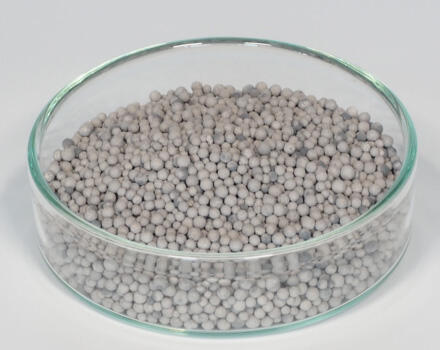
Shift-Reaction Catalysts by TANAKA (Water Gas Shift Reaction Catalysts)
Shift-Reaction Catalysts (water-gas shift catalyst) is a catalyst that converts carbon monoxide contained in the reforming reaction into CO2 by reacting it with water.
By selecting a highly active precious metal catalyst, it is possible to expect lower temperatures and smaller volumes.
Features
- Carbon monoxide removal performance close to equilibrium composition at low temperature ranges
- High SV design makes reforming system more compact
Main product lineup
| Product name | Precious metals | Particle size (sieve sorting) | Features |
|---|---|---|---|
| TSC30A Series | Pt | Φ approx. 2mm | Highly active and durable product |
- We request for the signing of a Non-Disclosure Agreement (NDA) when providing samples and information such as precious metal content.
- We also accept consultations regarding the prototyping and made-to-order production of customized catalysts to meet customer requests.
Reaction characteristics of Water-Gas Shift-Reaction Catalysts
TSC30A Series (Pt)
Reaction formula : CO +H2O → CO2+ H2
CO removal performance depending on reaction conditions
![[Graph comparing CO removal performance under different reaction conditions] GHSV(h-1):7,500/h](/jp/products/img/img_reforming_shift_reaction_prox_catalyst_14.png)
| Item | Value (Unit) |
|---|---|
| CH4 | 1% |
| CO | 7% |
| CO2 | 7% |
| H2O | 35% |
| H2 | 50% |
| GHSV(h-1) | 7,500 /h |
![[Graph comparing CO removal performance under different reaction conditions] GHSV(h-1):5,000/h](/jp/products/img/img_reforming_shift_reaction_prox_catalyst_15.png)
| Item | Value (Unit) |
|---|---|
| CH4 | 1% |
| CO | 2% |
| CO2 | 13% |
| H2O | 30% |
| H2 | 54% |
| GHSV(h-1) | 5,000 /h |
* Data for reference from laboratory experiments
The data is intended as a guideline only, as it may vary depending on the catalyst evaluation conditions, production conditions, usage environment, etc.
PROX Catalyst (Preferential Oxidation Catalyst for Carbon Monoxide)
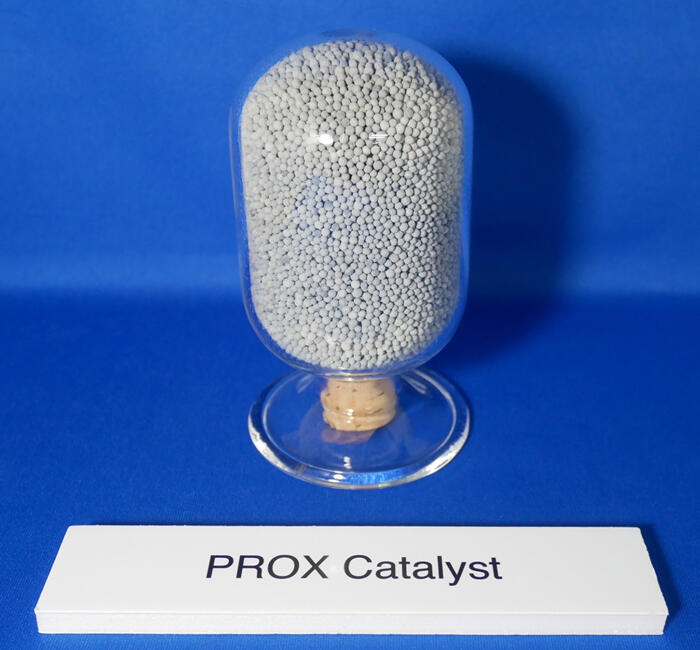
PROX Catalyst by TANAKA
PROX catalysts are catalysts that selectively oxidize and remove carbon monoxide contained in reformed gas using oxygen. Carbon monoxide poisons the electrodes of polymer electrolyte fuel cells and deteriorates cell performance, so the carbon monoxide concentration in reformed gas must be kept below 10 ppm. We provide high-quality PROX catalysts with excellent selectivity to meet our customers' needs.
Features
- Highly dispersed precious metals provide high activity even in high space velocity regions
- Highly active over a wide temperature range from low to high
- High catalytic activity can be maintained even with low precious metal content, enabling the supply of catalysts at low cost
Main product lineup
| Product name | Precious metals | Particle size (sieve sorting) | Features |
|---|---|---|---|
| TSSA-5 | Ru | Φ approx. 2mm | Highly active over a wide temperature range High durability Low cost |
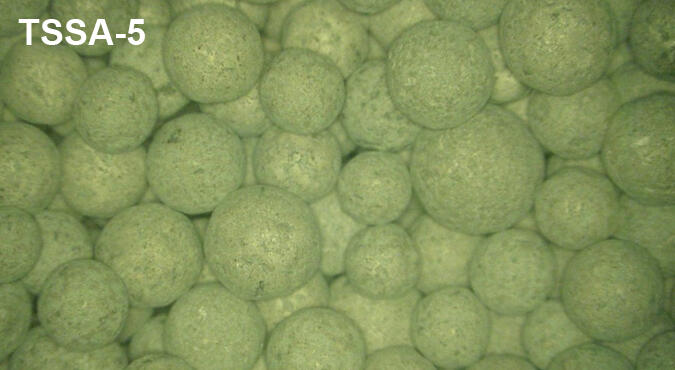
PROX reaction characteristics
Carbon monoxide selective oxidation properties
TSSA-5 (Ru)
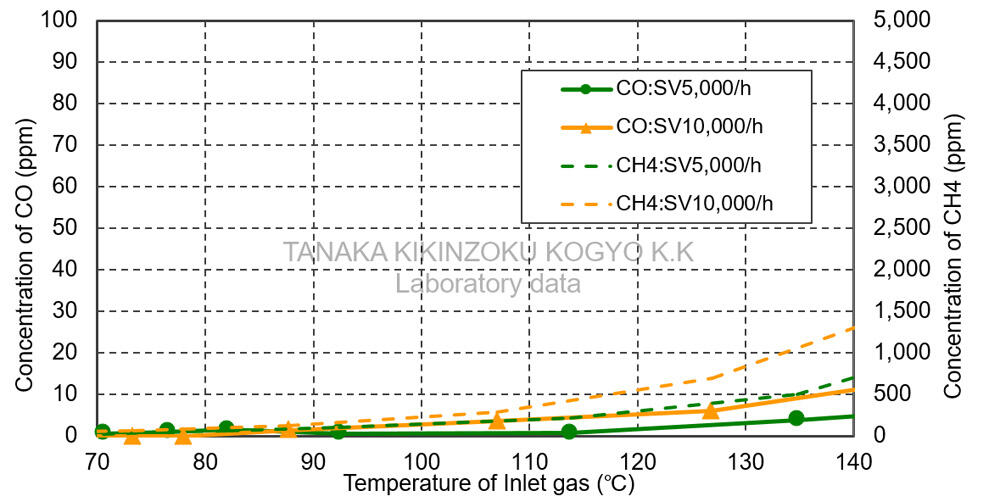
| CO | 0.6% |
| O2 | 1.2% |
| CO2 | 16.0% |
| H2 | 59.0% |
| H20 | 19.0% |
| N2 | balance |
O2/CO = 2.0
Back pressure:Max 0.1kPa(70-250℃)
Electric furnace: 170 → 70℃
* Data for reference from laboratory experiments
The data is intended as a guideline only, as it may vary depending on the catalyst evaluation conditions, production conditions, usage environment, etc.
Carbon monoxide selective oxidation characteristics (O2/CO dependency)
TSSA-5 (Ru)
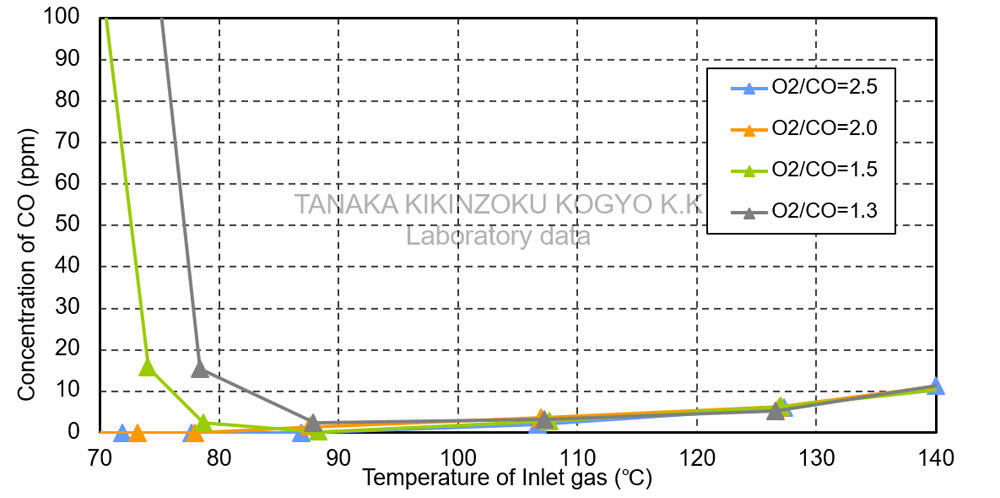
| CO | 0.6% |
| CO2 | 16.0% |
| H2 | 59.0% |
| H20 | 19.0% |
| N2 | balance |
SV:10,000h-1
Back pressure:Max 0.1kPa(70-250℃)
Electric furnace: 170 → 70℃
* Data for reference from laboratory experiments
The data is intended as a guideline only, as it may vary depending on the catalyst evaluation conditions, production conditions, usage environment, etc.
- We request for the signing of a Non-Disclosure Agreement (NDA) when providing samples and information such as precious metal content.
- We also accept consultations regarding the prototyping and made-to-order production of customized catalysts to meet customer requests.
Related Information


First, please make an Inquiry about the product.
For any questions regarding product specifications, pricing, delivery times, etc., please feel free to Inquiry here.