

TANAKA's Exhaust Gas Purification Catalysts
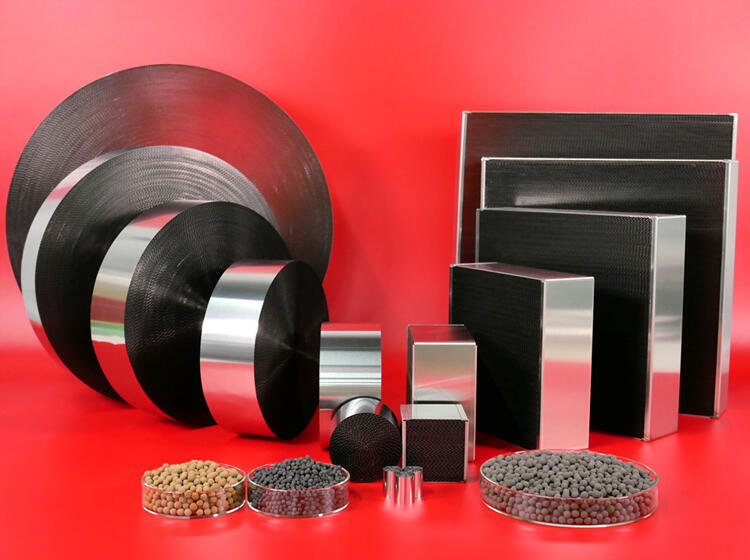
TANAKA's exhaust gas purification catalysts
TANAKA PRECIOUS METAL TECHNOLOGIES Kogyo began manufacturing and selling exhaust gas purification catalysts in 1995.
We have sold over 1 million liters of catalyst to hundreds of diverse customers, who have been using it for a long time.
Overview of Exhaust Gas Purification Catalysts
Benefits of Introducing Exhaust Gas Purification Catalysts

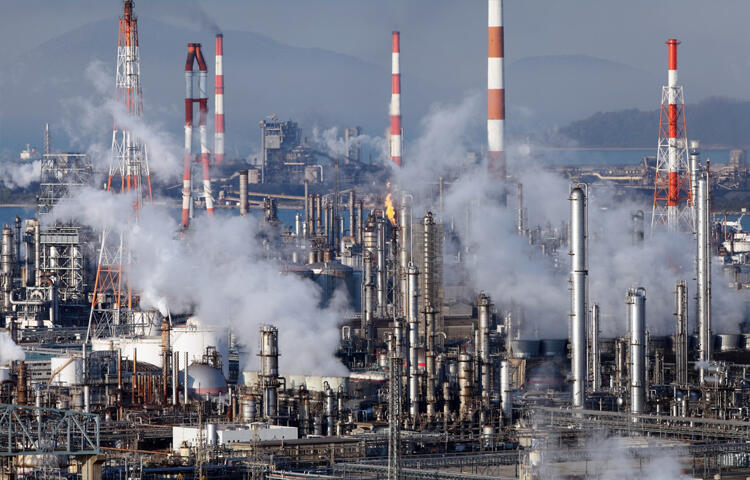
Measures against global warming and climate crisis
Volatile organic compounds (VOCs) with high global warming potential are emitted as CO2and H2O with low global warming potential. In addition, VOCs are decomposed and removed at low temperatures (around 350°C), which significantly reduces fuel consumption compared to direct combustion (around 800°C) of burner and other equipment, thereby reducing running costs and suppressing CO2emissions associated with fuel combustion. This helps reduce the environmental impact on the planet.
Improvement of working environment and surrounding environment of factories
Among volatile organic compounds (VOCs), there are many substances that have strong odors and toxicity even in extremely trace amounts. To completely decomposed such substances at low temperatures and improve the working environment, metal honeycomb catalysts, which can be designed with high-density cells, are used.
Compliance with VOC Emission Regulations
Various VOC emission regulations are being implemented in different countries to reduce volatile organic compounds (VOCs), which have a negative impact on the environment. By using Metal Honeycomb Catalysts, it is possible to comply with various regulations based on air pollution prevention.
Compactness and cost reduction of devices
The better the performance of a catalyst, the less catalyst can be used and the lower the temperature can be for designing the equipment. These factors lead to more compact equipment and lower costs due to the use of general-purpose materials. TKK's metal honeycomb catalysts, which have a large surface area, are coated with high-performance catalysts that achieve high catalytic performance with minimal catalyst.
Exhaust Gas Component Purification Characteristics by Applicable Field
Examples of Catalyst Applications
Click on the name of each field to view its dedicated page.
- Chemical Plant
- Gas Engine
- Fuel Cell
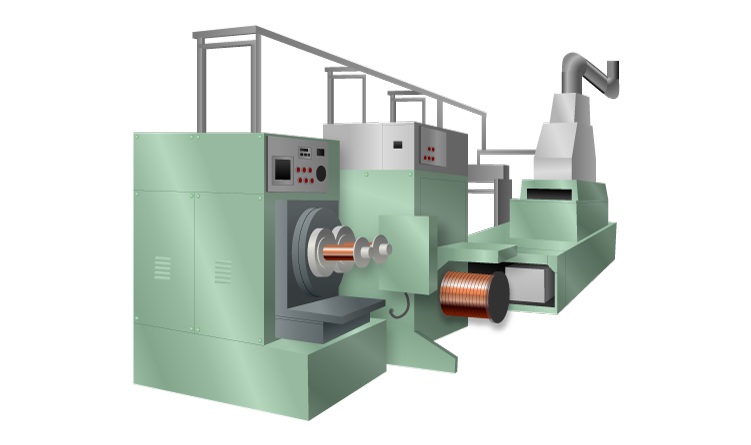
- Manufacture of Enamelled Wires
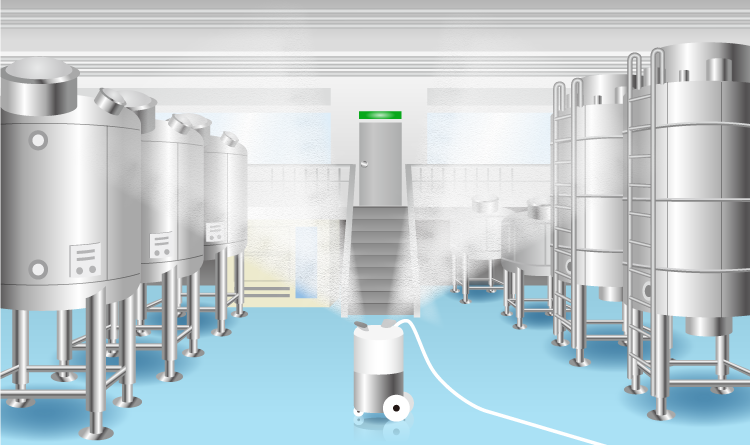
- Sterilization
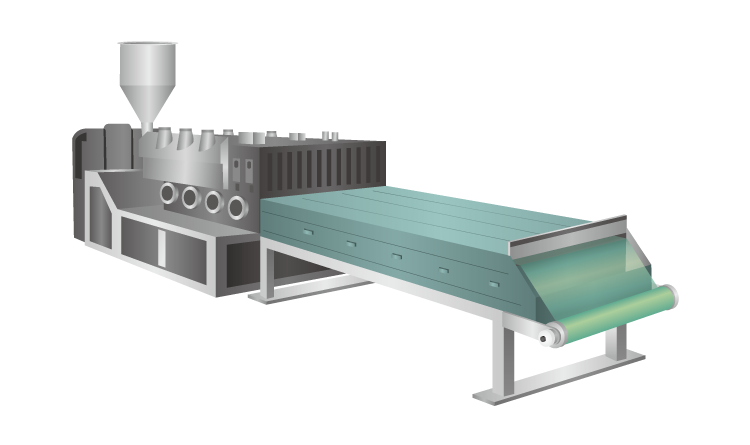
- Organic Film Manufacturing
- Laminated Material Manufacturing
- Ceramics Manufacturing
- Semiconductor Fabrication and TANAKA
- Coffee Roasting
- Food Manufacturing
- Food Waste Treatment
- electrodeposition coating
- Automotive Coatings
- Offset printing
- Gravure printing

Catalyst Poisoning, Catalyst Deactivation and Their Countermeasures
Click the blue text in the table to view data such as characteristics.
| Main Types of Contamination and Deterioration | Mechanism of Poisoning and Deterioration | Impact | Example | Response and Measures |
|---|---|---|---|---|
| steam | Depending on the decomposition gas, such as hydrogen or methane, the oxidative decomposition reaction may shift to a slightly higher temperature. Although it depends on the concentration, there is almost no degradation effect below saturated humidity. |
Weak | ||
| Dust and dirt Insulation material fragments Carbon |
Physically adheres to the surface of the catalyst. In small amounts, it has little effect if the substance is removed. |
Weak |   |
・Remove any adhering substances by air blowing or washing ・Periodically perform air burning at a temperature of 600℃ or below at the catalyst outlet |
| TAR | Carbon is the main component, but it often contains S, Si, P compounds, etc., which can cause degradation. In addition, if it is excessively adhered, it may lead to catalyst blockage and melting of the catalyst due to the rapid combustion of tar. |
Middle | 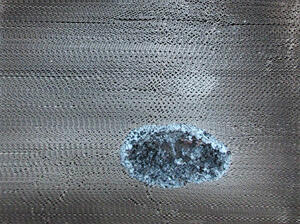 |
・Catalyst replacement (Precious metal recovery) ・Periodic air roasting of catalyst at temperatures below 600°C at the outlet |
| Sulfur compounds | Oxidized on the catalyst to form SOX and sulfuric acid components, which can lead to catalyst degradation. Toxicity varies depending on the components of the decomposition gas, and there are often cases where there is little impact at low concentrations. It exhibits strong toxicity during methane combustion. At high concentrations, corrosion components may corrode the honeycomb. |
Middle | 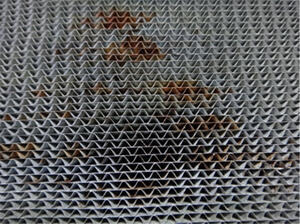 |
・Water washing ・ Use of sulfur-resistant catalysts ・Catalyst replacement (Precious metal recovery) |
| Halogen Compounds | Compounds of fluorine, chlorine, bromine, iodine, etc. These substances adsorb onto the active sites, causing the reaction temperature to shift to higher temperatures. In the case of hydrochloric acid and other inorganic acids, deterioration is more pronounced due to corrosion and other factors. (Example of halogen poisoning) |
Middle |  |
・Catalyst replacement (Precious metal recovery) ・Installation of pretreatment catalyst |
| Organosilicon compounds Organophosphorus compounds Organometallic compounds |
A typical substance that degrades catalysts. It coats catalysts by forming compounds such as SiO2and P2O5on the catalytic active sites of Pt and other metals, thereby reducing their performance. (Example of silicon poisoning) |
Strong | 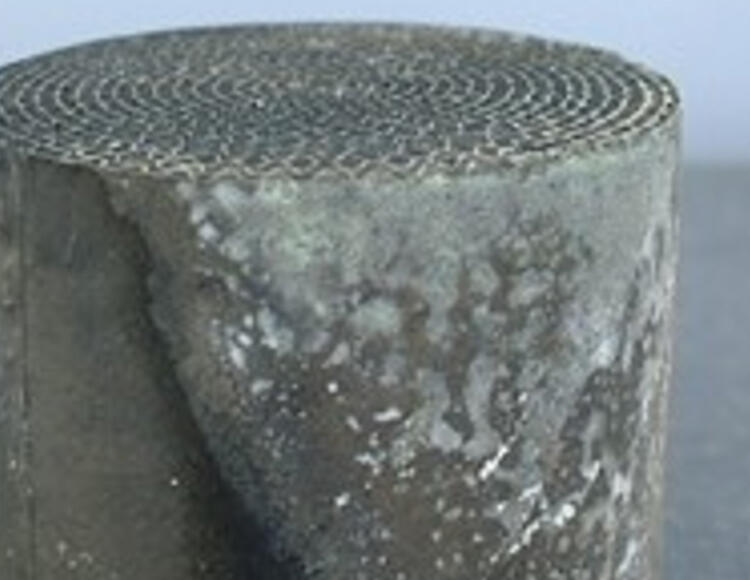 |
・Catalyst replacement (precious metal recovery) ・ Installation of pretreatment catalyst ・Consideration of silicon countermeasures for catalysts |
| Thermal degradation | Exposure to high temperatures (600℃ or higher) and other conditions can cause fine Pt particles to agglomerate, resulting in a decrease in active sites and catalyst degradation. In addition, exposure to temperatures of 1,000℃ or higher may cause deformation of the metal honeycomb, which could lead to cell blockage and gaps and a decline in performance. |
Middle | ・Catalyst replacement (Precious metal recovery) (Heat resistance of our catalysts) |
Support for Exhaust Gas Purification Catalyst Products
We provide various technical support related to catalysts, including the use of test catalysts to check whether catalysts will function properly before purchase, the analysis of test catalysts, exhaust gas purification tests at customer sites, the confirmation of the activity of catalysts in use, and the analysis of the causes of degradation.
Installation and Analysis of Test Catalysts
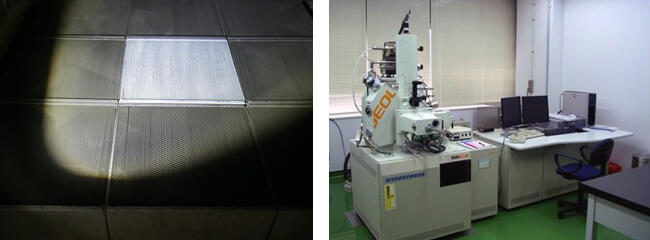
By testing and installing several types of catalysts and removing them after a certain period to check their catalytic functions, it is possible to select the most suitable catalyst. In addition, we use the latest analytical equipment to conduct various analyses on the status of installed catalysts.
Exhaust Gas Purification Test at Customer Site
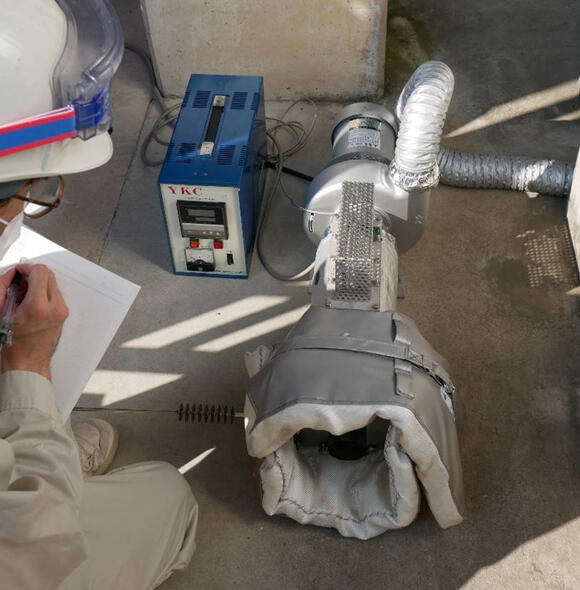
A portion of the gas actually being emitted can be diverted, and air can be blown through the catalyst to conduct tests, making it possible to check purification performance with actual gas in advance.
Advice on Catalyst Installation
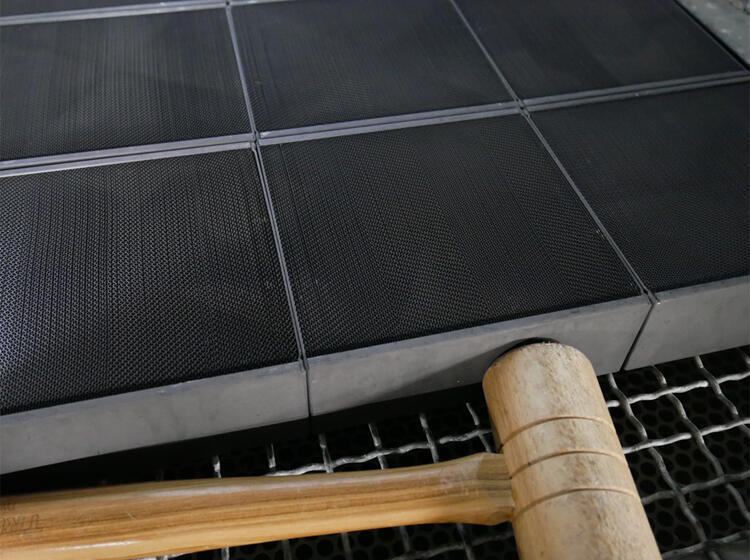
We will provide advice on how to properly incorporate catalysts on site.
Investigation of Factors Causing Catalyst Deactivation
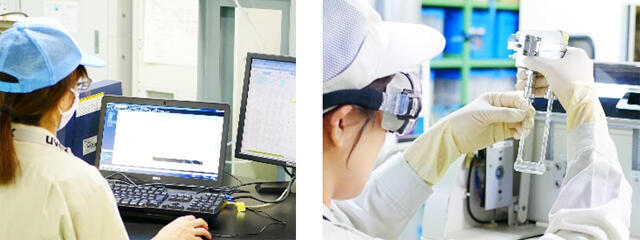
When the catalytic function declines, we conduct analytical studies on the catalyst's activity and factors causing deterioration.
Depending on the catalyst installation location and support content, we may not be able to provide support. Please Inquiry us for details.
TANAKA's Total Solutions
Catalyst Development (Precious Metal Catalysts)
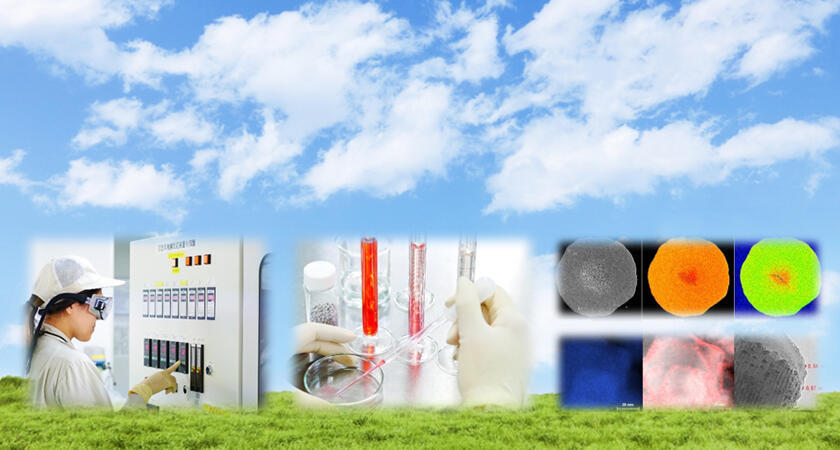
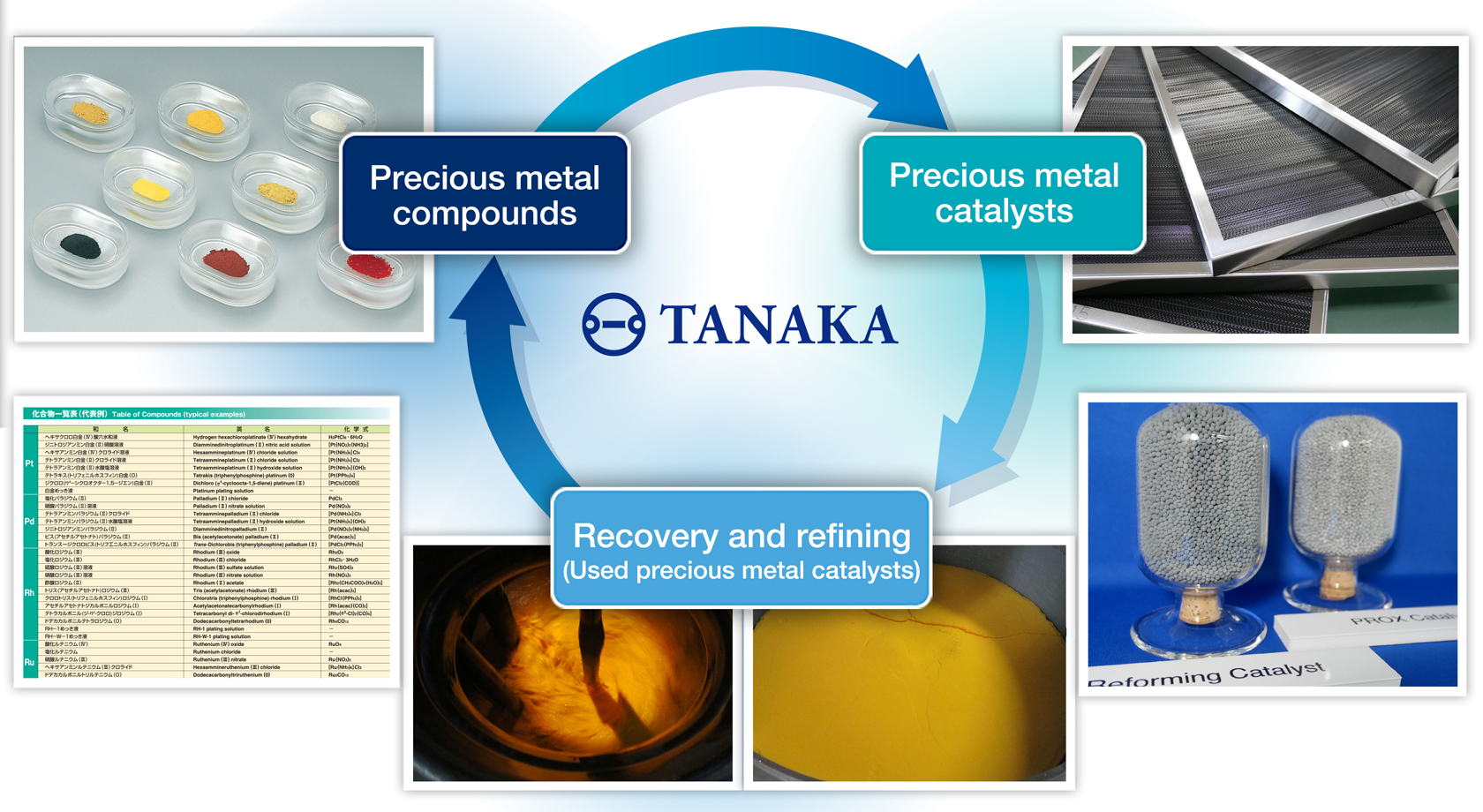
We combine a diverse range of precious metal materials, extensive development track record, and advanced manufacturing and analytical evaluation technologies to develop exhaust gas purification catalysts, reforming catalysts, PROX catalysts, and CO2effective utilization catalysts specialized in precious metals, as well as catalysts tailored to our customers' needs.
Contract Manufacturing (Precious Metal Catalysts)
We aim to manufacture catalysts at low cost by combining the precious metal-based catalysts developed by our customers with our diverse precious metal materials and our advanced catalyst manufacturing technologies.
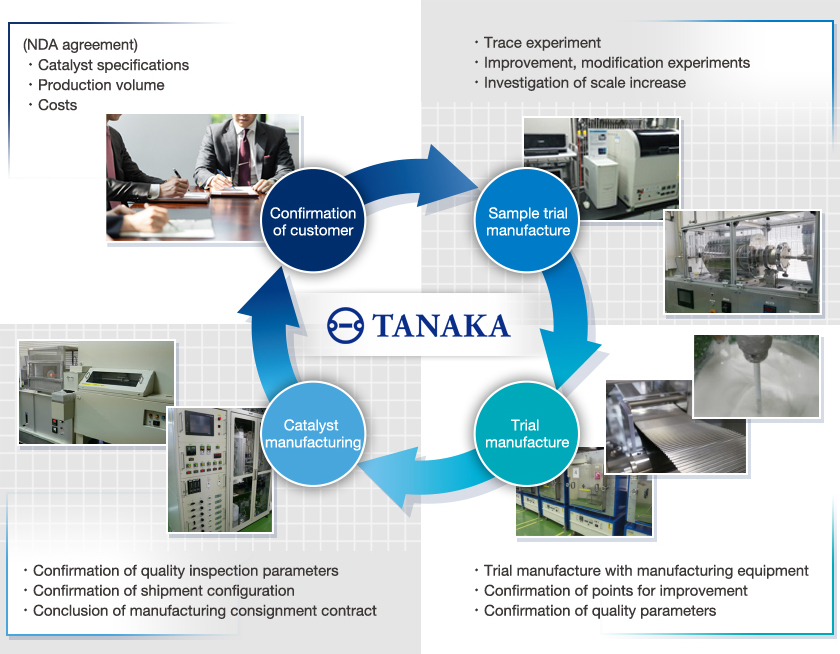
Depending on the content, we may not be able to respond. For more details, please make an Inquiry.
Recycling
Using our advanced extraction technology, we can recover and refine precious metals from used precious metal catalysts. In addition, by reusing the recovered and refined precious metals, we can reduce the cost of purchasing new catalysts.
Related Information


![[BUSINESS INSIDER]TANAKA's Technological Strengths Behind High-Performance Catalysts "Made in Japan" That Contribute to the Chinese Industry](/jp/products/solution/img/img_exhaust-gas-purification-catalysts_27.jpg)

First, please make an Inquiry about the product.
For any questions regarding product specifications, pricing, delivery times, etc., please feel free to Inquiry here.